Reflections on Lectures
In the past few years we’ve seen the revolution of the graphic design practice. The digital sphere has emerged, and new techniques and requirements were created and became part of clients’ briefs. Adaptation levels of designers were very quick in grasping all these requirements and delivering to customers on timely manners. Also, the learning curve was at the same time as we were all experimenting while implementing. We started to see what works and what does not. However, the different adaptations and sizes were crazy. Also, there were specific requirements per platform. The branding definition has also changed. It became more of experiential and technological. It moved to different digital spheres like 360-degree video simulations and VR experiences that took you to other places at the same time.
Overall, the entire focus is now shifting towards digital media, which is the evolving future of graphic design. Today, responsive web design is among the top priorities in any designer’s quest for job excellence. Responsive design, a layout that adjusts itself according to the screen size and shape of the tablet, smartphone, or desktop, is easily one of the biggest trends in the graphic design industry. The future promises to take the “responsive” game to the next level, by creating designs that not only fulfils fitting the screen size and shape but also caters to the viewer’s mood and emotions.
There is the rise of .gif files. Currently gifs are used to create a sense of humor with funny reactions and use of animals. However, the future could see the use of gifs on billboard advertising or stand-up comedy shows.
Another category is stock photography. It is quite abundant now. But soon, stock photographers will be able to capture all Earth sceneries possible and human interactions. Designers will be able to find anything in the best lighting, effects, and animation on the web.
With the rise of AR/VR technologies, designers will get out of their shell and limitations and work more on real-world components for an immersive experience.
With the emergence and widespread popularity of Pinterest, the style of brick-esque, solid blocked images in website designs are hugely prevalent now. One of the critical things we can pick from Pinterest is that words are unnecessary. Visuals tend to throw a better appeal and importantly, learning experience, quality images, hyperlinks, emoticons, and memes are what we love to see and read. Undoubtedly, the future is going to welcome designers to the digital world full of figurative images.
As we know that multi-layer designs are gathering popularity in the industry while comparing striking yet differing typefaces to catch the viewer’s attention. As expected, the trend is on the rise and likely to revolutionised the science of typography on a more general level. However, in future every word on each page will have its own typeface in a striking manner.
Destination branding is another big thing that is getting the center of attention for many nations across the globe. It is being used by the tourism and hospitality industries. The idea is to lure more tourism through a beautiful, reasonable graphic representation. For example, destination brands such as Grand Central Station in New York City, Victoria sub-district of London and Visit Dubai; these places have gotten more distinct than the capital. We will be seeing an increasing number of new destinations with their own unique graphic characters soon.
Lecture 2 – New Steps – Susanna Edwards in conversation with Maziar Raein
Learning to go with the flow and develop interchangeable skills will be indispensable in a creative career. Any designer needs to rethink his/her role and how secure it is. What’s the next step? What else can I offer? You should also question your current industry, especially in comparison to growing industries. In business, you’re only as valuable as your skills. The more skills you have, the more valuable you will become. Continuous learning is the best investment you can make in yourself.
This lecture ventured into a new sphere of design which is Speculative Design. It was very interesting researching this topic. Speculative Design is based on critical thinking and dialogue, which questions the practice of design. It’s to form a theory or hypothesise about a subject without firm evidence. Speculative Design can be used to design future products or systems, like hardware, software, or even experiences — imagining, exploring, and bringing unique speculative visions of the future. For example, Apple imagined the future while re-thinking the role of technology in everyday life, and moved the company forward into a product category that already had giant players in it (BlackBerry, Nokia, etc.), but with a unique product unlike any other. Speculative Design helped Apple to move away from the constraints of the commercial practice. At launch, the critics were comparing the iPhone against other smartphones and measuring it to the metrics people thought were important at that time. But with imagination and radical approach, coupled with design as a medium, helped Apple shift the entire mobile phone market into a new paradigm.
As a designer, I do think it’s good to keep an open mind to different/new design processes. It’s always good practice to remember that great design is a continuous journey of exploration and discovery. I personally feel that if used correctly, speculative design could be a great innovation tool for education, organisations and even for the environment.
Resources
TED (2017) Anab Jain: Why We Need to Imagine Different Futures
This was one of the most interesting resource available this week. I was intrigued to explore the various topics discussed by the speaker: drones, face recognition and sustainable energy cities in the UAE.
There are a huge array of companies investigating the possible impact of drones upon their industries, including retail giants like Walmart and Amazon, as well as tech companies like Google. Delivery by drones is one of the most common uses for drones in the future. They will transform our lives. Hundreds, if not thousands, of drones will fly high above towns and cities, bypassing the congested highways and streets currently plagued by traffic. Put simply, the drone revolution will change the way in which we conceive and comprehend logistics and transportation.
Drones also represent immense promise in the transport industry too, with this tech predicted to replace around $13 billion worth of human labour and business services by 2020. Drones are already being utilised in the agricultural industry to help monitor vast farmland, analyse soil samples, and even herd cattle. The uses of drones in agriculture could expand even more in the future, with researchers currently working on insect-sized drones in Japan. These tiny drones would be used to pollinate plants, using horse hairs and a sticky ionic gel to move pollen between flowers. Drones also hold great potential in the construction industry. One innovation, which is being developed at Imperial College London, is the creation of drones which are equipped with 3D printers. This remote-controlled equipment will be able to construct and repair buildings by printing materials as they fly. Drones have a wide variety of uses, with this technology representing the future for many industries.
According to a research report “Facial Recognition Market” by Component, the facial recognition industry is expected to grow $3.2 billion in 2019 to $7.0 billion by 2024 in the U.S. The most significant uses for the technology being for surveillance and marketing. This, however, raises concerns for many people (forbes.com). I personally feel that its bad. Facial recognition technology’s indiscriminate and large-scale recording, storing and analysing of our images undermines this right because it means we can no longer do anything in public without the country knowing about it. Most countries have no specific legislation that regulates the use of facial recognition technology, although some lawmakers are trying to change this. This legal debate opens the door to abuse, such as obtaining our images without our knowledge or consent and using them in ways we would not approve of. The right to privacy matters, even in public spaces. On the governmental level, facial recognition can help identify terrorists or any other criminals with the help of the face scan only. As for personal use, facial recognition can be used as a security tool for locking personal devices and for personal surveillance cameras.
According to IRENA (International Renewable Energy Agency), Renewable energy has become economically attractive in the oil-rich United Arab Emirates (UAE). Ramping up renewables to 10% of the country’s total energy mix, and 25% of total power generation, could generate annual savings of USD 1.9 billion by 2030 through avoidance of fossil-fuel consumption and lower energy costs. In addition to renewables being consistent with the UAE’s broader goals of modernization and diversification, the UAE is well suited to shift toward renewable sources given its high amounts of sunshine: the UAE averages 350 days of sunlight every year with over ten hours of sunlight per day, enough to power a substantial solar fleet.
The UAE aims to achieve a sustainable infrastructure for generating power through renewable energy. The demand for electricity and water continues to grow at a fast pace due to a rise in population, an expanding economy and climatic considerations.
Workshop Challenge
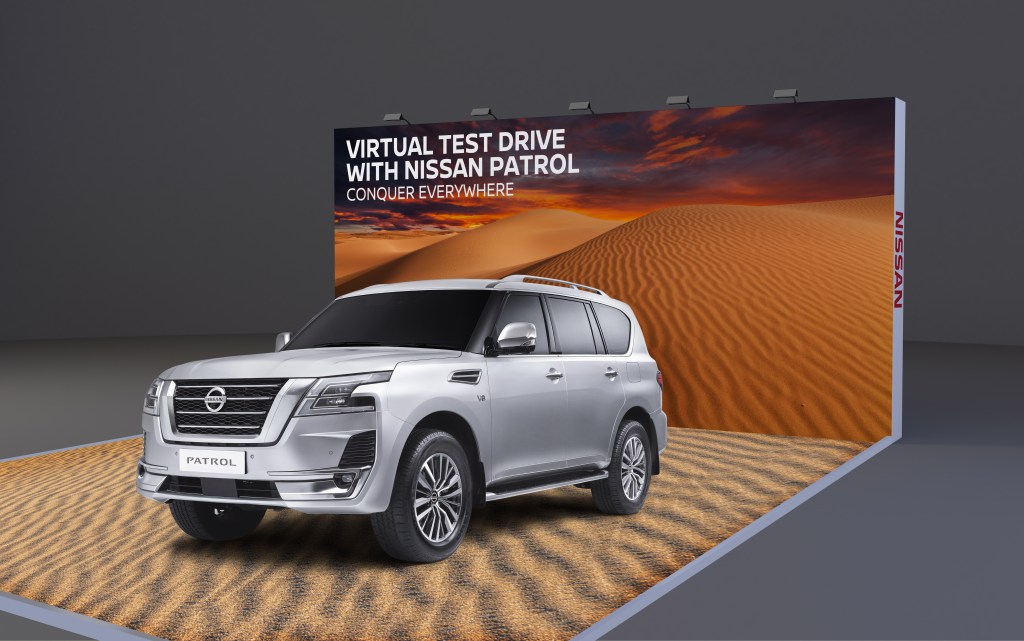
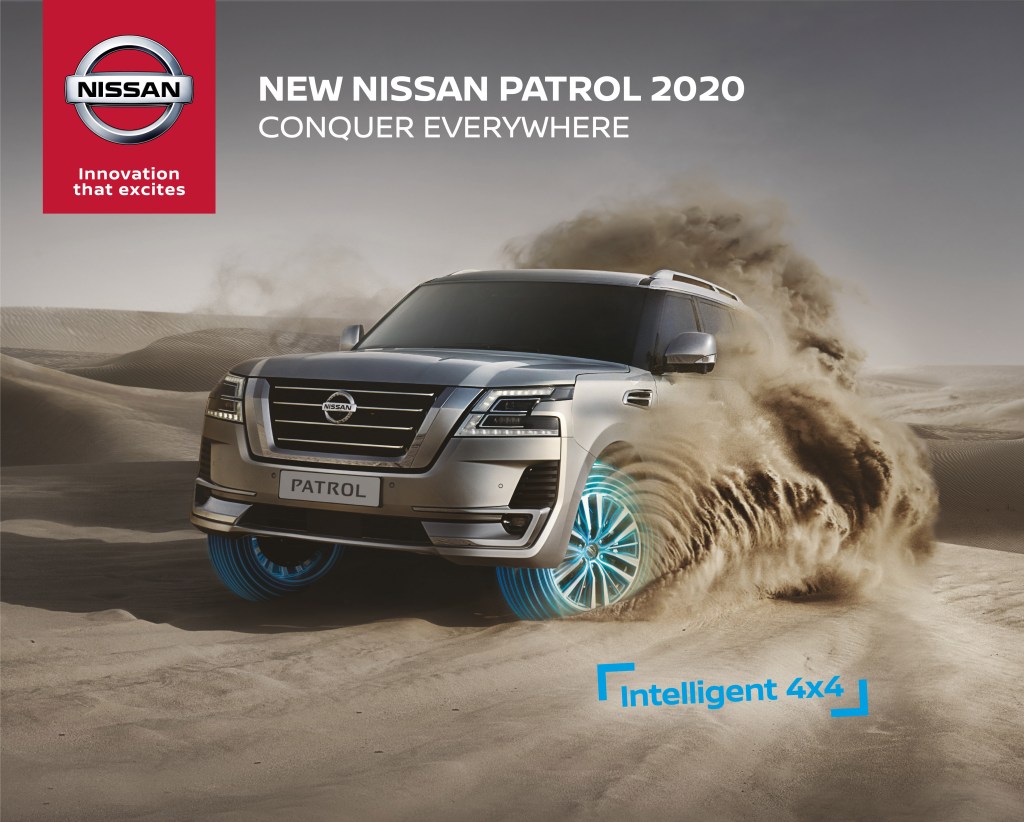
Virtual Test Drive with the New Nissan Patrol 2020 – Conquer Everywhere
I have decided to create an activation to Introduce the New Nissan Patrol 2020. It is one of the best four-wheel drive vehicles in its category. The car is heavily used in the Middle East and there is even a Patrol Desert Edition available.
“The Patrol is an icon. In a region steeped in tradition, yet steered by the future, the Patrol is the perfect combination of heritage and prestige with purpose. Conquering the elements comes as second nature to an SUV whose reputation and authority is equaled only by its legendary V8 power. A fresh new look makes its presence even more unmistakable. The Patrol is a legend, reborn.”
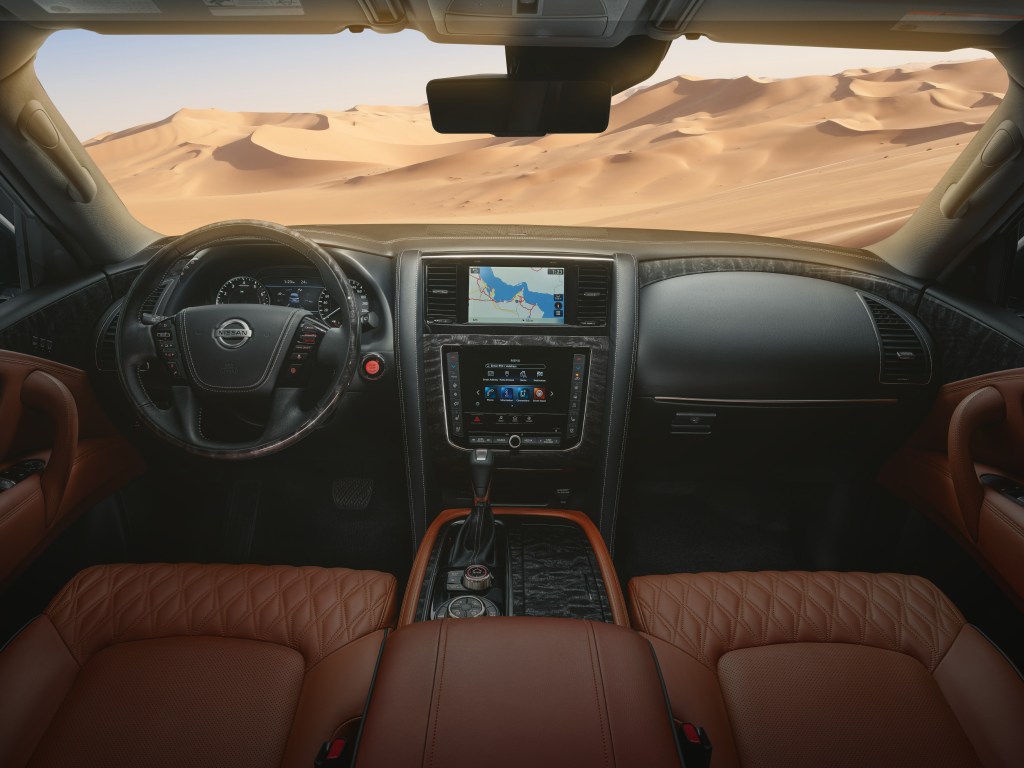
The virtual test drive activation will let customers test the vehicle in a real-world desert environment using virtual screen technology. The activation stand shall be placed indoors in a mall. Audience would interact through a virtual screen display on the glass shield where the desert environment is displayed and drive as if they were playing a video game. The steering wheel shall have sensors and move and vibrate according to the bumps and slopes shown on the screen. The target audience are mainly young adults to mid-aged men, high mid-class to high-class income. The test drive would act as an extension to the brand’s advertising for the new model and its TVC that takes place in the desert environment showcasing the car’s off-road features. The car includes the following features: Premium in vehicle Infotainment, intuitive HMI Navigation System, enhanced Voice Recognition Function, Advanced Driver Assist Display, Nissan Intelligent Mobility, First-Class Comfort and Convenience, Flexibility for Any Load, and Nissan Advanced Safety.
Omar Mal
April 22, 2020
 Omar Mal