The role of designer as author and as maker

According to Designer as Author article, authorship, in one form or another, has been a popular term in graphic design circles, especially those at the edge of the profession, the design academies and the murky territories that exist between design and art. The word authorship has a ring of importance: it connotes seductive ideas of origination and agency.
Authorship may suggest new approaches to understanding design process in a profession traditionally associated more with the communication than the origination of messages. But theories of authorship may also serve as legitimizing strategies, and authorial aspirations may end up reinforcing certain conservative notions of design production and subjectivity — ideas that run counter to recent critical attempts to overthrow the perception of design based on individual brilliance. The implications deserve careful evaluation. What does it really mean to call for a graphic designer to be an author?
Michel Foucault used the rhetorical question “What is an author?” as the title of his influential essay of 1969 which outlines the basic taxonomy and functions of the author and the problems associated with conventional ideas of authorship and origination. Foucault posits that the earliest sacred texts were authorless, their origins lost in ancient history (the Vedas, the Gospels, etc.). The very anonymity of the text served as a certain kind of authentication. The author’s name was symbolic, rarely attributable to an individual.
The codification of ownership over a text is often dated to the adoption of the Statute of Anne (1709) by the British Parliament, generally considered the first real copyright act. Ownership of the text, and the authority granted to authors at the expense of the creative reader, fueled much of the 20th century’s obsession with authorship.
The parallel to design practice is useful. Like the film director, the art director or designer is often assigned his or her material and often works collaboratively in a role directing the activity of several other creative people. In addition, the designer works on a few diverse projects over the course of a career, many of which have widely varying levels of creative potential; any inner meaning must come through the aesthetic treatment as much as from the content.
Perhaps the graphic author is one who writes and publishes material about design. This category would include Josef Müller-Brockmann and Rudy VanderLans, Paul Rand and Eric Spiekermann, William Morris and Neville Brody, Robin Kinross and Ellen Lupton — rather strange bedfellows. The entrepreneurial arm of authorship affords the possibility of personal voice and wide distribution. The challenge is that most in this category split the activities into three recognizable and discrete actions: editing, writing and designing. Design remains the vehicle for their written thought even when they are acting as their own clients.
Designer as translator: this assumes that the act of design is the clarification of material or the remodeling of content from one form to another. The goal is the expression of a given content rendered in a form that reaches a new audience. In certain works, the designer remolds the raw material of given content, rendering it legible to a new audience. Like the poetic translator, the designer transforms not only the literal meaning of the elements but the spirit, too.
Designer as performer: The performer metaphor is based on theater and music. In this model, the designer transforms and expresses content through graphic devices. The score or script is enhanced and made whole by the performance. And so the designer likewise becomes the physical manifestation of the content, not author but performer, the one who gives life to, who speaks the content, contextualizing it and bringing it into the frame of the present.
Designer as director: This model is a function of bigness. Meaning is manufactured by the arrangement of elements, so there must be many elements at play. Only in large-scale installations, advertising campaigns, mass-distribution magazines and very large books do we see evidence of this paradigm. In such large projects, the designer orchestrates masses of materials to shape meaning, working like a film director, overseeing a script, a series of performances, photographers, artists, and production crews. The meaning of the work results from the entire production. Large-scale, mass-distribution campaigns like those for Nike or Coca-Cola are examples of this approach.
On the other hand, work is made by someone. And the difference between the way different writers or designers approach situations and make sense of the world is at the heart of a certain criticism. The challenge is to accept the multiplicity of methods that comprise design language. Authorship is only one device to compel designers to rethink process and expand their methods.
If we really need to coin a phrase to describe an activity encompassing imaging, editing, narration, chronicling, performing, translating, organizing and directing, I’ll conclude with a suggestion:
designer = designer.
This article is an adaptation of Graphic Authorship (1996) for publication in Multiple Signatures: On Designers, Authors, Readers and Users (Spring 2013)
In my opinion, credit must be given to the creator of the idea. The designer comes up with and most of the time follows up to implementation of the idea. This happens in the case of advertising agencies, where they suggest ideas or concepts to clients which has a potential to be created physically. They must think of all the ways to make it happen and collaborate with production houses and media agencies. But in the end, the graphic authorship is given to the agency and the art director in charge of the project. This is how most agencies submit entries to win awards. It is through ideas that things are made. The designer acts as an author and maker. With copyrighting and legal ownership, designers can now save their works from getting stolen and gain legal authorship.
Author and Maker
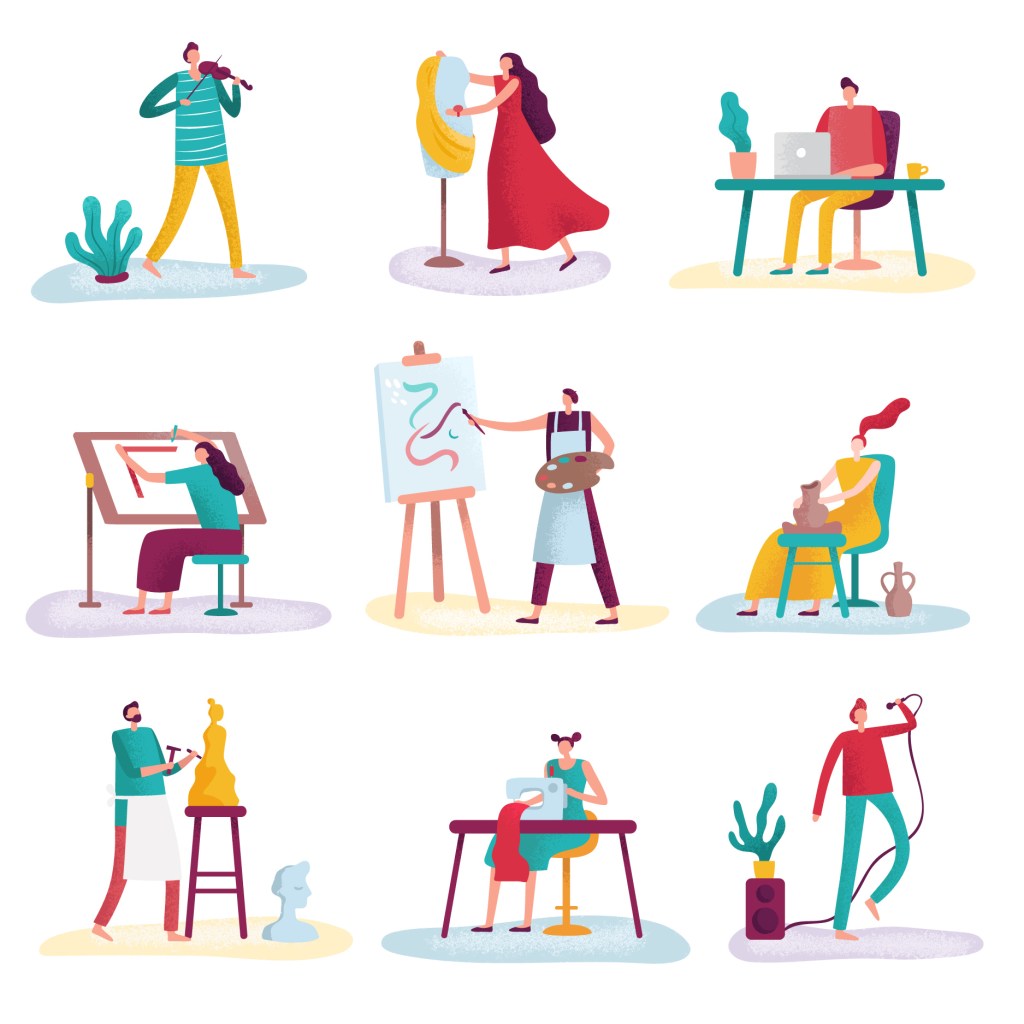
I have thought of ten initial ideas for a series of outputs I could make as an author. I started thinking into my interests and what I would like to be known for. Below are the ideas:
“The Art of Deception” – this is an idea about creating and publishing a book about advertising. It covers the inner thoughts of designers and how they sell ideas.
Wall Art across the country – this work of art showcases the originality of each designer by expressing his/her own unique style and beautifying the walls of the country. The work goes towards charity.
Workshops for kids – this idea is executed by collaborating with institutes and summer schools to provide kids with basic skills.
Short courses about graphic design – this idea is executed by collaborating with colleges and universities to provide courses about Basics of Graphic Design – i.e. Graphic design 101.
Instagram account – create original content to be shared about graphic design, tips and tricks, etc.
Passport Covers – this idea is executed in collaboration with the Ministry of Tourism. This work is controversial about certain countries and destinations, it might go further into creating a travel kit with essential elements for a traveler.
Bahraini magnets – this idea is based on creating magnets to be sold in duty free at the airport which showcases main landmarks and common sayings in slang Bahraini language.
Playing card designs – still famous amongst Arabs especially in Ramadan and special occasions, this idea is about creating designs that utilize recognizable sayings and funny quotes.
Gaming headphone designs or range in collaboration with Virgin Megastores or Beats – targeted towards the gamers and youth.
Graphics funky furniture for youth in collaboration with Ikea – by creating a special furniture section for the youth with different interests, like in music, arts, gaming, etc.
Designer Examples
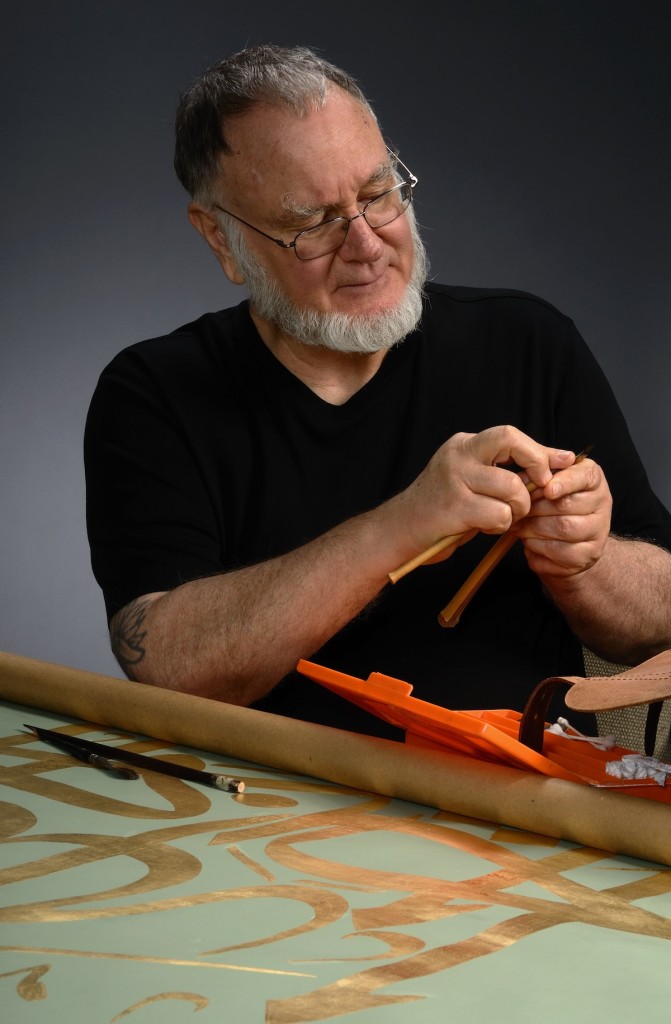
Example 1: Mohammed Zakariya
A calligrapher, turner, metalworker—combines classical standards with a modern sensibility to produce works on paper, fantasies in wood, and instruments from the history of science. With no formal education, Zakariya learned his trades in aerospace-industry machine shops; in the Los Angeles atelier of Oscar Meyer, the French impresario of antiques and objects de virtu; at the British Museum; and at Istanbul’s Research Center for Islamic Art, History, and Culture, where he earned two licenses in Islamic calligraphy—the first Westerner to do so.
Zakariya grew up in Southern California in the 1940s and 50s. In 1961, after a holiday in Morocco, Zakariya accepted Islam and began to learn the Arabic language and the study of Islamic calligraphy. He was 19. These interests took him many times to Morocco, Spain, and England, where he remained for a few years studying calligraphy and manuscripts at the British Museum. During this time, he made a living restoring old houses and acting in the British comic troupe “Bruce Lacey and the Alberts.”
Since settling in the Washington, D.C., area in 1972, Zakariya has traveled frequently to Turkey and the Persian Gulf and has exhibited and lectured extensively in this country and abroad. Known for his design of the “Eid Greetings” U.S. postage stamps, he concentrates primarily on classical Arabic and Ottoman Turkish calligraphy.
Recent experience includes a stint as artist-in-residence at the Doris Duke Foundation for Islamic Art in Honolulu; solo exhibitions at the Museum of Islamic Arts in Doha, Qatar; the Asia Society, New York; the Institute for Works on Paper, San Francisco; and the Bellevue (Washington) Arts Center; and group exhibitions in Dubai and Kuwait. Taking it as his mission to revive classical texts through aesthetically arresting presentation, Zakariya is considered the preeminent ambassador of the art of Islamic calligraphy in America. Zakariya’s work is held in private collections and in some public collections. He designed a postage stamp for the United States Postal Service to commemorate Eid, which appeared in three editions in 2009, 2011 and 2013.
“U.S. Muslims Push Stamp As Symbol of Acceptance”, The New York Times, By LAURIE GOODSTEIN, NOV. 20, 2001
^ “Eid Greetings Stamp | USPS.com”. store.usps.com. Retrieved 2020-07-07.
https://mohamedzakariya.com/about/my-work/
Example 2: Abbas Almosawi
A Bahraini painter and professional artist for more than forty years and the founder of the Art and Peace project in 1991. A prolific artist and vocal campaigner for peace, he uses art to promote harmony and togetherness. His work has been exhibited on four continents, and he has worked with the UN to raise awareness about peace and environment conservation efforts.
Abbas took the opportunity by seeing a gap in the market for arts at that time and collaborated with the UN for his biggest peace project till date. He has worked on iconic projects like taking over and creating all the official stamps of the country. He also published two books, one is his biography and the other is about art. He has taught as an art teacher in his early years while working on expanding his art passion.
https://en.wikipedia.org/wiki/Abbas_Almosawi
https://arthubabudhabi.wixsite.com/the-collection/abbas-al-mosawi
http://www.bahartsociety.org.bh/bio-mosawi.html
Omar Mal
August 5, 2020
 Omar Mal