Client Relationships, Insight, Content, Structure
For service-based small businesses, a freelancer or a small agency owner, strong client relationships are especially important to make consistent revenue. In the early days, you need to establish your relationship by setting the right tone. Communication isn’t the only important factor in building a strong relationship with a new client. While it’s great to be available whenever you’re needed, you also need to continuously prove that you’re able to provide the right solution to the client’s problems or needs. To identify pain points and problems, read into the conversations you’re having with each client and the questions they’re asking you to identify the root of their business challenges. While you don’t want to overstep boundaries and you always want to remain respectful, going above your client’s expectations can show you’re dedicated to helping them improve. Get to know how your clients like to connect and fit their preferences– do they prefer video chatting, or is emailing less time-consuming for them? Knowing your client’s communication styles can make it easier for you to get in touch with them when something urgent comes up.

Goal setting is important for moving your business forward and improving your client relationships. Through establishing common goals that both you and your client can work towards, you can develop long-term bonds that make you more invested in one another. When a client comes to you with a challenge or project, think beyond just solving that immediate problem. To create a valuable long-term relationship, consider how you both can continuously improve and work together to further improve their business. Listen to your client and share ideas. Set clear measurable objectives together and discuss expectations for both parties. Then, discuss how you’re going to achieve each goal. Payment is crucial to any small business, but as a freelancer or consultant, an overdue invoice could mean being unable to pay a bill. Instead, establishing a clear invoicing and payment process can ensure you’re paid in full and on-time. Talk to your clients early on about your payment requirements as well as their invoicing needs to set those expectations.
Building a strong client relationship is a never-ending learning process. Because both you and your client are running dynamic businesses with changing needs, challenges, and goals, you need to remain in consistent contact to ensure you’re always on the same page.
A business plan must be prepared for the client. There are six types of business plans. A business owner or prospective business owner writes a business plan to clarify each aspect of his business, describing the objectives that will anticipate and prepare for growth. Savvy business owners write a business plan to guide management and to promote investment capital. Types of business plans include, but are not limited to, start-up, internal, strategic, feasibility, operations and growth plans.
Start-up businesses should detail the steps to start the new enterprise with a start-up business plan. This document typically includes sections describing the company, the product or service your business will supply, market evaluations and your projected management team.
Internal business plans target a specific audience within the business, for example, the marketing team who need to evaluate a proposed project. This document will describe the company’s current state, including operational costs and profitability, then calculate if and how the business will repay any capital needed for the project. Internal plans provide information about project marketing, hiring and tech costs.
A strategic business plan provides a high-level view of a company’s goals and how it will achieve them, laying out a foundational plan for the entire company. While the structure of a strategic plan differs from company to company, most include five elements: business vision, mission statement, definition of critical success factors, strategies for achieving objectives and an implementation schedule.
A feasibility business plan answers two primary questions about a proposed business venture: who will purchase the service or product a company wants to sell, and if the venture can turn a profit. Feasibility business plans include, but are not limited to, sections describing the need for the product or service, target demographics and required capital. A feasibility plan ends with recommendations for going forward.
Operations plans are internal plans that consist of elements related to company operations. It specifies implementation markers, deadlines for the coming year, and outlines employees’ responsibilities.
Growth plans or expansion plans are in-depth descriptions of proposed growth and are written for internal or external purposes. If company growth requires investment, a growth plan may include complete descriptions of the company, its management and officers.
Week 4 – Workshop Challenge
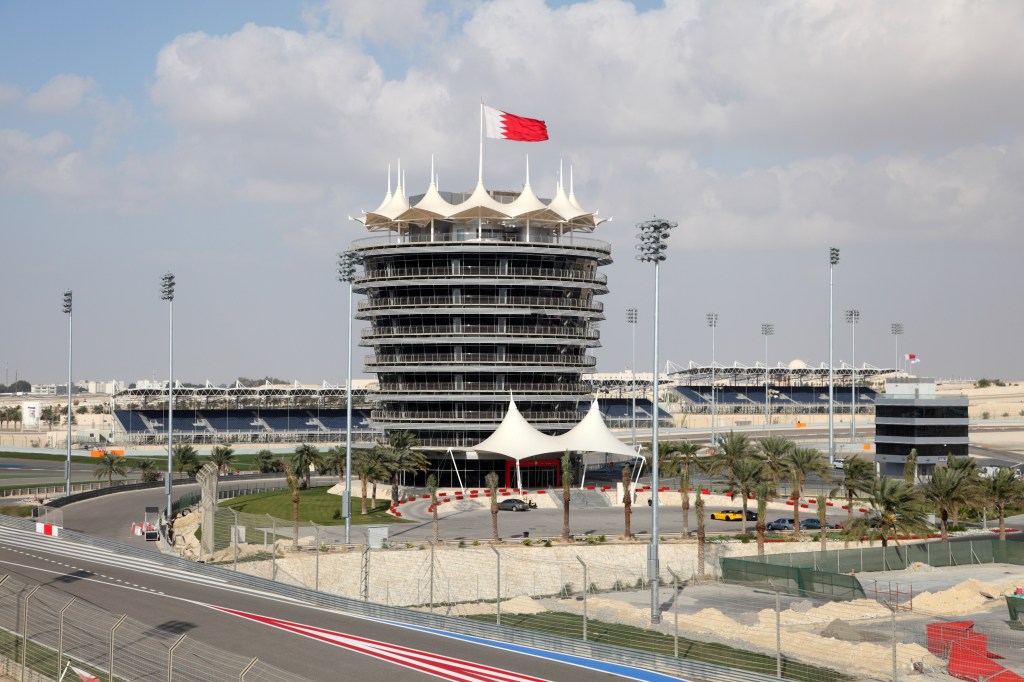
In this week’s workshop challenge, I will be doing a strategy for a request for proposal (RFP) for Bahrain International Circuit for the appointment of a creative and design agency. Despite the BIC hosting many motorsport events, this will mainly focus on the F1 as Bahrain is one of the hosts of this global event.
Located in the heart of the Sakhir desert, the Bahrain International Circuit is a unique and contemporary facility that is synonymous with the highest levels of global motorsport. Featuring five different track layouts, the circuit first saw life in 2004 when the first ever Formula 1 Grand Prix took place in the country, making it the first-ever track in the Middle East to host the Formula 1 World Championship.
In the process of gathering information, I had to study the BIC and go back to when they started back in 2004. Every year, the F1 campaign is the biggest campaign in the country with a huge budget. The campaign books all the medias across the country starting from the airport till the BIC location in the Sakhir desert. They also book regional and international medias, such as, international magazines and TV spots. The F1 campaign usually has a very strong theme which is very different from each year. Also, every year there is a pitch for the F1 campaign, and many creative agencies apply to get an opportunity to work on the biggest campaign in the kingdom. The agency with the best unique creative concept wins the pitch. Hence, for my strategy workshop challenge, the idea of the night race was presented.

Omar Mal
June 22, 2020
 Omar Mal