Approaches and Strategies for Working Today and Delivering Creative Services
People thrive in environments that free them to communicate and work together. When the company environment is focused on collaboration, team members naturally feel a part of something bigger than themselves. The best way to transition from an individual to a collaborative mindset is to equip each team member for active participation in the group dynamic.
According to entrepreneur.com, in a collaborative environment, each team member experiences what it means to take part in the shared responsibility of results. With this type of focus, what starts out as a goal becomes a crusade with the experience of success changing from an individual achievement into a bonded group experience building comrade and morale.
To drive success in team members it’s important to set measurable goals for each on a quarterly basis. The purpose of these goals is to provide team members with achievable wins.
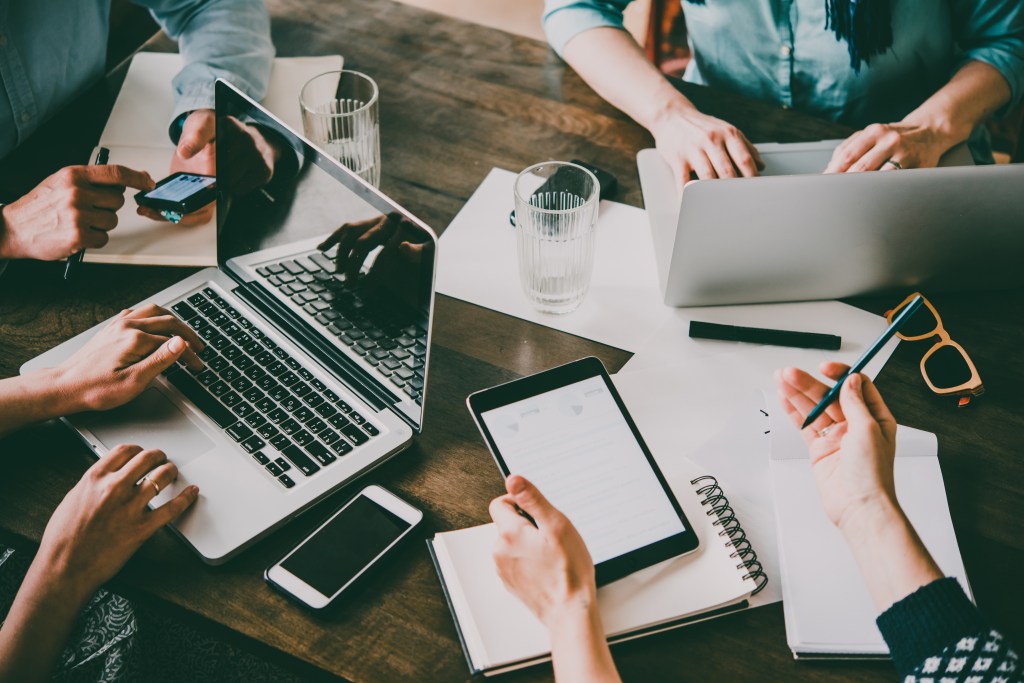
To empower each team member, it is a great strategy to work with their strengths rather than working around their weaknesses. It is a good idea to have each member take a personality test such as the Myers-Briggs and hold a team roundtable to share results. This is a great bonding exercise because the results allow each person to get to know themselves and their team members in a much deeper way.
Cohesive teams are more successful. They are successful because each person on the team is included in as many large decisions as possible. When team members feel this type of inclusion, they feel the perceived significance of their role, causing them to naturally perform better.

For teams to grow they must be encouraged to brainstorm and question the status quo in an open and non-judgmental environment. Team members must be coached and led to believe the challenges and obstacles they face can and will be overcome. When a “can-do” attitude is instilled it motivates team members to live up to those “can-do” expectations.
Socializing with co-workers outside the office is an effective way to open channels of communication, to create a better understanding and break down any walls of pre-judgmental or mistrust between team members.
Attaching performance rewards and bonuses to collaborative efforts sends the right message to team members about the values that are driving the business. When team members feel they are a part of something exceptional they are more than willing to work together to get the ball across the goal line. Collaboration works because there is nothing more meaningful, bonding, or growth-promoting than a shared win.
New Models of Practice
Graphic designers need to be updated with all the new trends especially in this fast-paced digital world. What are some of the new design trends in 2020?
1. Intensifying minimalism
In the latter half of the 2010s, we’ve seen minimalist, flat design dominates the world of digital. The main benefit of flat design is in allowing users to quickly interact with interfaces and find the content they’re looking for. In fact, whatever the medium, flat design, along with the evolving discipline of UX design, is giving graphic designers a powerful tool to help people easily navigate content.
2. Abstract 3D and vibrant colours
The stunning work produced for the Greenwich Peninsula Festival by Droga5 is a great example, both on the posters and animated for digital. Like watching a well-designed lava lamp, a mesmerising bubble shape moves elegantly across the screen, instantly catching your attention and drawing you into the information piece.
3. Type-only approaches
Simple, bold typography has been a big 2019 trend, and that’s set to continue in 2020. Designers are playing with typography more than ever, to create more innovative and modern compositions. Artistic typography, maxi typography spilt into multiple lines, and semi-transparent fonts forming various shapes are all on the rise.
4. Taking GIFs to the next level
As GIFs grow in popularity across social media platforms, animations have also grown in quick succession and are more popular in email marketing and web page design than ever before. It’s time for brands to follow and explore how the popularity of the updated GIF format can work for them. Otherwise, it’s an opportunity wasted.
5. Multisensoral moving content
Motion design and moving images are becoming more popular than stills. As we move into the future, brands will attempt to gain recognition for their style of motion graphic or brand sound. Visual brand equities will transcend into kinetic equities as multi-sensorial branding takes on a whole new literal meaning. The value of sound design will play a pivotal role in brand recognition and awareness, and with meaningful motion we can really add value.
6. Adaptive Typography
Interest can be found in deformed letters, bespoke glyphs and disruptive typesetting, where intrigue overtakes legibility in the design hierarchy. A great example is Uber Move, where they developed a sans-serif typeface that has been a major player in their rebrand, delivering their brand messaging via moving posters hyper-effectively. We’re seeing much more from big brands using moving typography as the main graphic element in creative across the web and social.
https://thumbs.gfycat.com/WarmGrimyAnnelid-mobile.mp4
7. Focus on Gen Alpha
Millennials are now approaching their forties, Generation Z are entering their twenties, and the focus of branding experts is now starting to fall on Gen Alpha: those born during the 2010s. Gen Alpha interact with tech more naturally and instinctively than any previous generation, and this will influence brand touchpoints and micro behaviours profoundly. More brands in 2020 will move away from just using visuals to communicate to customers, instead they’ll craft interface-less, designed moments that surprise and delight to create long term brand loyalty, and if you’re lucky, adoration. The opportunity for designers and brand guardians is massive.
8. Organic look and feel
Throughout the 2010s, we’ve seen more and more brand and packaging design focus on the organic, the calming and the natural. And right now, that trend is only heightening. From digital lifestyle brands like Uber we’re seeing a softening and a simplicity, through their use of more approachable typography with fewer capitals, more circular letterforms and clean, naturalistic icons. In recent campaigns from Nike and Adidas, we’re seeing greater honesty to styling and photography, focusing on real individuals in less staged environments, reflecting a desire for more one-on-one conversations.
9. Action on sustainability
The focus on sustainability right now isn’t just affecting what designs looklike, but the design process itself. More brands are trying to make a positive contribution by transitioning towards innovative approaches to packaging, such as using recyclable or ethically sourced materials.
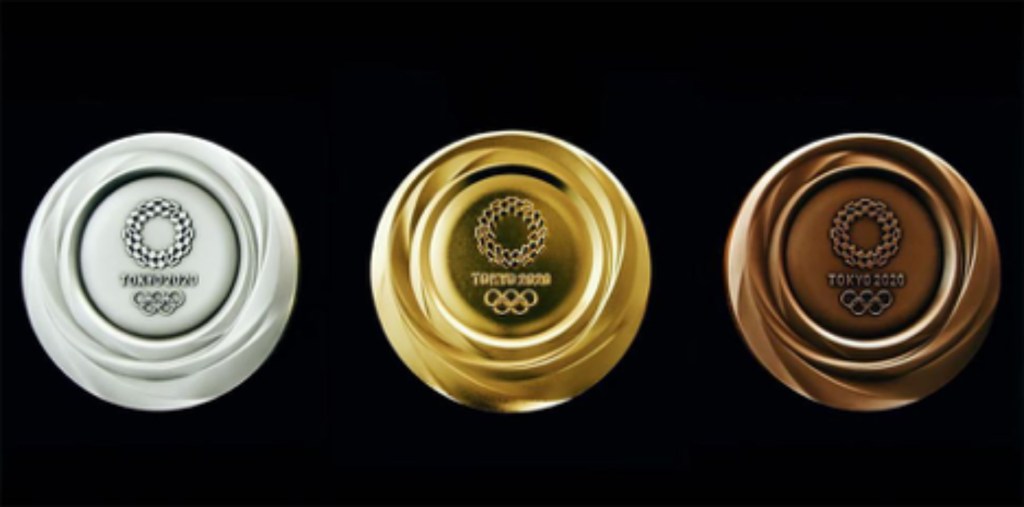
As designers take more responsibility for the collateral they help create, the desire to find sustainable materials, techniques and finishes are at the front of mind when every new brief comes in.
10. New perspectives on gender and sexuality
Design in 2020 will be more human focused, celebrating the benefit and the individual compelling product attributes, rather than just who it’s for. We’ll see even more brands moving away from the traditional ‘This is designed for a woman therefore it needs to be pink’ approach, and instead celebrate personalisation and the real person behind the product. How brands behave and position themselves in this environment will raise questions with consumers that could have a lasting impact on sales and profitability.
11. Device dependent design
In 2020, we’ll continue to see the chasm widen in responsive design. Although styled similarly, the designed experience will become fully tailored for the platform consuming it. Expect to see websites and web apps designed with unique experiences for each format. Our experiences are now consumed differently depending on the way they are viewed and used. The best web experiences will be defined by their ability to meet this new design challenge and captivate an audience with specific designs matched to experiences across different platforms.
12. Cause-based branding
The time when brands would avoid taking a stance on social and political issues is long gone. And that trend is only going to become more marked in 2020. Equity-focused marketing will continue, as brands continue to show they ‘believe everyone is of equal and important value, but what will change in 2020 is putting real funds toward actual causes behind their message.
13. Immersive experiences
AR and the use of immersive experiences is going to dominate the design industry. With tools like Spark AR, and the development of phone and camera technology, it’s much easier to create professional content. As a result, brands are turning to AR to increase engagements and sales. It’s about empowering the consumer to become part of the brand experience, rather than remain a passive receiver that’s endlessly dictated to. The way to do this is by marrying the digital with the physical.
14. Uncertainty
From multiple and gradient colour palettes to flexible typography and procedurally generated brand identities, design itself will have to move quickly to keep pace with the unstable political climate, on-demand culture and shortening attention spans of a society with little patience, and little appreciation for the previous generations’ meticulous approach to long-lasting, but ultimately, static design.
Source: https://www.creativebloq.com/features/graphic-design-trends-2020
Media & Communication platforms
Idea 1 – The Creative Hub:
An internal digital tool used by agency members across all departments. It’s an interface that shows the progress of all current jobs in the pipeline in the agency and who’s working on what, with status updates. It shall have image libraries of the different brands being handled and guidelines. Also, time zones will show for international clients in order to schedule meetings accordingly. There shall be brainstorming digital meeting rooms for creatives to discuss ideas while on their desk doing other tasks simultaneously. This tool will be a huge help for the Traffic Manager, as his job of running around is no longer required. The interface shall have him view the dashboard from an admin’s perspective and track the flow of jobs with assigned job numbers. Members across the agency can chat on the interface to discuss any job or if they have any questions. This tool could also be accessed remotely outside the office from any device.
Idea 2 – Behance Chatting Feature:
Create more features on the portal to enable designers to interact more with each other and discuss trending topics of design. It should allow designers to share sketches, ideas, concepts, and suggest or provide feedback. It would create more flow of ideas.
Workshop Challenge
Elevator Pitch Script:
One of the most important outcomes of a collaborative workplace is the positive effect it has on an organisation’s innovation output. A cohesive environment is the perfect vehicle for creative thinking and idea generation. A few steps to creating new and more exciting collaborative ways are:
• Have the right technology in place
• Run an internal innovation challenge to: Unlock innovation potential through a game-like approach & give everyone an opportunity to have a say. Establish a judgment-free idea-sharing culture: where new ideas and discussions are consistently welcome, whether they are small and strange or ambitious and dramatic.
• Encourage collaboration across departments: The combination of differing objectives, people types, and skillsets can lead to the most effective idea generation.
• Offer positivity and rewards: this is crucial in encouraging future collaborations, as employees will realise the benefits of working together.
Nowadays, the focus is on team effort. There is a multitude of benefits to be reaped from a collaborative workplace, from greater employee satisfaction to increased idea generation.
Omar Mal
July 15, 2020
 Omar Mal