Lecture – Outcome and Ambition
Self-initiated projects let you immerse in your world of passion and interest. There are usually no boundaries or restrictions. You set the rules and you challenge yourself. Commercial projects are very restrictive and have usually tight deadlines. Also, the clients have a huge influence, and some not all, interfere in the design development process. While self-initiated projects provide the designer with freedom and room for improvement by providing new challenges and new ways of exploration. Also, time is a bit laid back and there is flexibility in everything. It represents you, your personal identity as a designer. It shows your true colors and passions of interests. In a way, it paves the way for you to create your own personal brand. I would like to pave the way to create my brand towards web-based projects focusing on digital channels and game design.
The dilemma here is that self-initiated projects are not paid. Taking on a side project can be quite a commitment. It takes a tremendous amount of time, energy and resources, and quite often progress is made after-hours or on weekends. However, client-led projects are what you are paid for as a designer and it takes overall, if not, most of your time as its also part of your job. Also, these clients have certain guidelines to follow and certain business objectives to achieve. Everything is clear and the way forward is to come up with a solution to their brief and launch a certain campaign in a required amount of time within a required budget. There are many restrictions, but you must deliver accordingly to please your client as this is a collaborative partnership.
Side projects afford us the freedom to dig a bit deeper and discover creative solutions we otherwise wouldn’t have found with projects that come with greater constraints. Unlike client projects, whose constraints are beyond our control, the constraints we must contend with in personal initiatives are self-imposed. We can deliberately set these boundaries to spur creative exploration and discovery, which in turn can be leveraged to benefit client projects in the future.
Personal projects are an excellent way to put something out in the world that is entirely your own. It is a clear indicator that you are a passionate and dedicated designer who thinks outside the box, and it can lead to opportunities that would not happen otherwise. If the project is interesting and you share it effectively, people will probably take notice. Put the project online, announce it to your social network, post it on relevant blogs. In other words, don’t assume people will find your project — actively get it in front of the appropriate audience. Also, don’t forget to include information about yourself. Whether it’s an “About” page or simply a link to your personal website in the footer, people should be able to easily find who did the work. Additionally, mention why you did the project, or provide additional information that the user can explore if they are interested in the topic.
Personal side projects are a cornerstone of creative growth and discovery. While they might not always result in financial gain, the long-term benefits are often much more useful. Benefits such as personal growth, creative exploration and generation of professional opportunities are some of the reasons to engage in them.
Evaluating A Project Idea
To anaylse and evaluate the idea of a project, you need to consider the following questions:
• Who are your competitors?
• Is your project in line with recent developments and trends?
• Have you chosen the right time to launch your project?
• Whom is your project done for? Who is your target audience?
• How different is your project compared to your competitors’ projects?
Look again, who is solving the same issue and creates the same value? The mode of operation and the way to solve the problem could be different from yours, but still look who is planning to achieve the same result you aspire to. To analyse competitors and environment it is better to use such instruments like SWOT analyses or Porter five forces analysis.
When answering this question, you should verify the problem your project is set to solve. Is there really a problem? Is it a real problem for your target audience? When checking for the relevance, you should do the target audience opinion poll to check your hypothesis and to collect data on your problem from the open sources. This will help you with the project design. Target audience insights, relevance and research are key.
The question is to do not only with the awareness, but also the readiness on the market or with your audience for your project, its product or service. In what areas do you overlap with your competitors? It is not less important to analyse social, economic and political aspects. Timing is key such as seasonality.
Target audience is a group of people whose problem your project is set to solve, it is for them that you create your value proposition. Do identify the portrait of your audience as clearly as possible. To do that you can use the existing pattern analyses to describe the portrait of your TA – the so-called Marketing Persona or Client Avatar. What does the customer THINK & HEAR? What does the customer SEE? What does the customer SAY or DO? What does the customer HEAR?
Identify the key distinctive features that will differentiate you among other similar projects. You can do it by improving one of the components that your competitor already has or you can create your own new and unique value.
(Source: culturepartnershio.eu)
Workshop Challenge
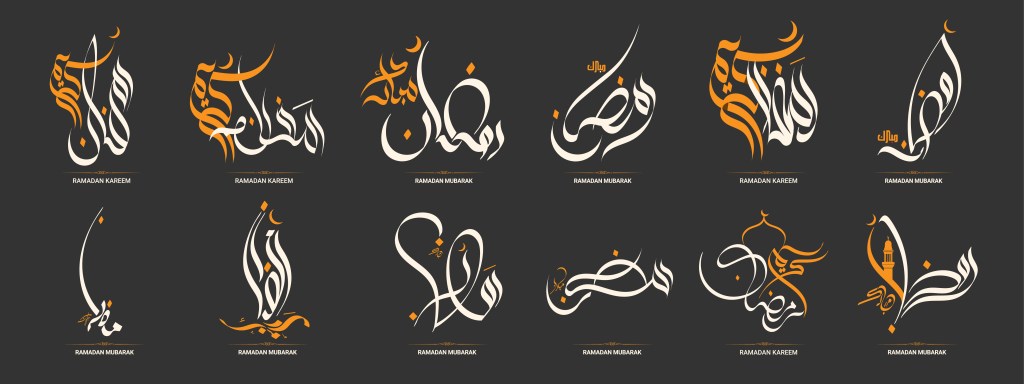
I believe my self-initiated project was a success. The design outcome answers the question of creating a brand identity for an Esports team and this will be the first time ever, so putting the Kingdom of Bahrain on the map. However, if more time has been given, I would have worked more on the logo. The final logo has been tested with Bahraini gamers and they were excited about the project. This project relates directly to my personal interest of gaming and eSports. It made me work, day and night, with various sketches and designs, until I reached the final outcome. Research was purposeful, as I investigated many eSports team logos and decided to create a funky and patriotic one to stand out. However, it’s still redundant amongst the other eSports logos and perhaps I could’ve made it a bit more cultural and simpler. Perhaps I should change the logo completely and make it have less of (NFL) look and more simplistic (maybe more Arabic calligraphy elements incorporated).
After working on this project as my area of interest, I am thinking of meeting up with the top players and making this project idea come to life. I am excited to have created this and it would be an honor to be the designer for the first ever Bahraini eSports team.
Omar Mal
October 14, 2020
 Omar Mal