Typography
Typography is the detail and the presentation of a story. It represents the voice of an atmosphere, or historical setting of some kind. It can do a lot of things. (Cyrus Highsmith)
Typography is body language. It is what makes the first impression. Good typography enhances the character of the site and adds a tone of voice, which subliminally reinforces what the words say to influence how those words are perceived. And yes, there is research to back this up. More font choices mean more personality, expressiveness, and creativity.
Source: https://cxl.com/blog/the-effects-of-typography-on-user-experience-conversions/
Islamic calligraphy is the artistic practice of handwriting and calligraphy, in the languages which use Arabic alphabet. It includes Arabic, Persian, Ottoman, Afghan, Pakistan, and Indian calligraphy. It is known in Arabic as khatt Arabi (خط عربي), which translates into Arabic line, design, or construction.
The development of Islamic calligraphy is strongly tied to the Holy Qur’an; chapters and excerpts from the Qur’an are a common and almost universal text upon which Islamic calligraphy is based. In the ancient world, though, artists would often get around this prohibition by using strands of tiny writing to construct lines and images. Calligraphy was a valued art form, even as a moral good. An ancient Arabic proverb illustrates this point by emphatically stating that “Purity of writing is purity of the soul.”
However, Islamic calligraphy is not limited to strictly religious subjects, objects, or spaces. Like all Islamic art, it encompasses a diverse array of works created in a wide variety of contexts. The prevalence of calligraphy in Islamic art is not directly related to its non-figural tradition; rather, it reflects the centrality of the notion of writing and written text in Islam. It is noteworthy, for instance, that the Islamic prophet Muhammad is related to have said: “The first thing God created was the pen.”
Islamic calligraphy developed from two major styles: Kufic and Naskh. There are several variations of each, as well as regionally specific styles. Arabic or Persian calligraphy has also been incorporated into modern art, beginning with the post-colonial period in the Middle East, as well as the more recent style of calligraffiti.
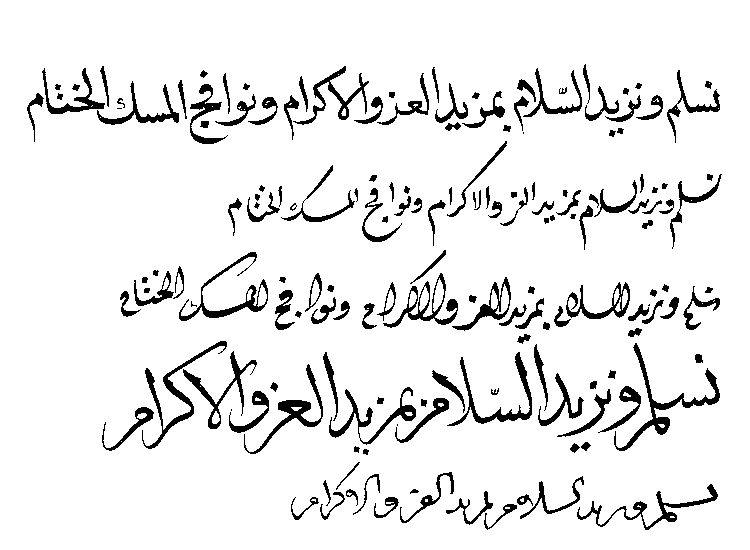
The traditional instrument of the Islamic calligrapher is the qalam, a pen normally made of dried reed or bamboo. The ink is often in color and chosen so that its intensity can vary greatly, creating dynamism and movement in the letter forms. Some styles are often written using a metallic-tip pen.
Islamic calligraphy can be applied to a wide range of decorative mediums other than paper, such as tiles, vessels, carpets, and stone. Before the advent of paper, papyrus and parchment were used for writing. During the 9th century, an influx of paper from China revolutionized calligraphy. While monasteries in Europe treasured a few dozen volumes, libraries in the Muslim world regularly contained hundreds and even thousands of books.
For centuries, the art of writing has fulfilled a central iconographic function in Islamic art. Although the academic tradition of Islamic calligraphy began in Baghdad, the center of the Islamic empire during much of its early history, it eventually spread as far as India and Spain.
Coins were another support for calligraphy. Beginning in 692, the Islamic caliphate reformed the coinage of the Near East by replacing Byzantine Christian imagery with Islamic phrases inscribed in Arabic. This was especially true for dinars, or gold coins of high value. Generally, the coins were inscribed with quotes from the Qur’an.
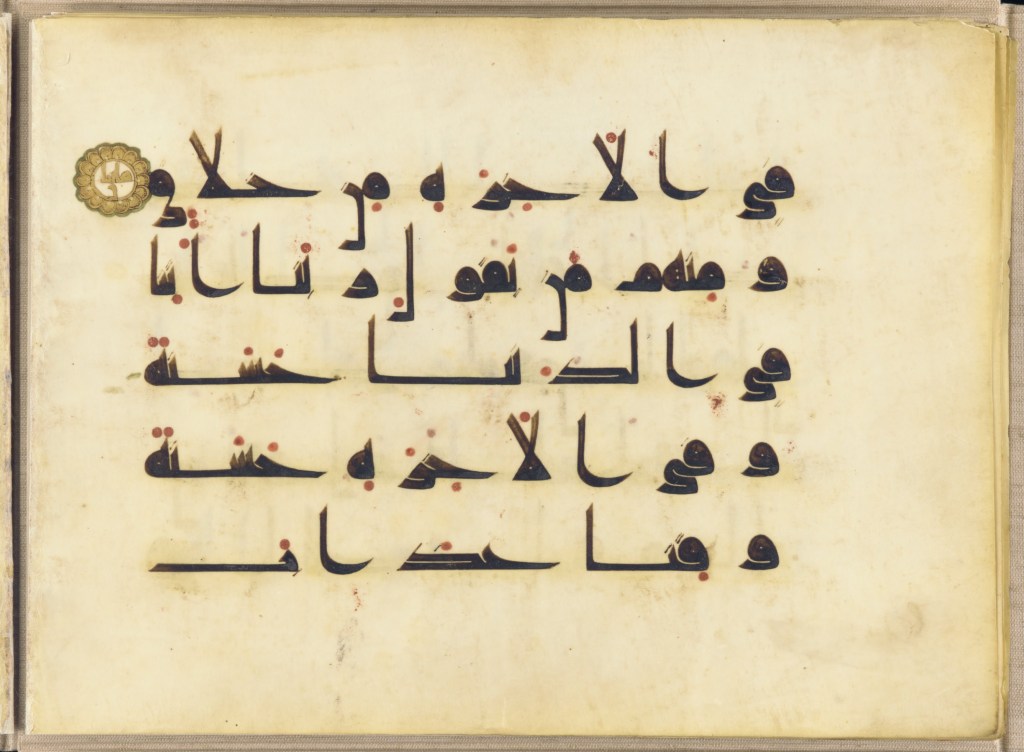
Kufic is the oldest form of the Arabic script. The style emphasizes rigid and angular strokes, which appears as a modified form of the old Nabataean script. The Archaic Kufi consisted of about 17 letters without diacritic dots or accents. Diacritical markings were added during the 7th century to help readers with pronunciation of the Qur’an and other important documents, increasing the number of Arabic letters to 28. Although some scholars dispute this, Kufic script was supposedly developed around the end of the 7th century in Kufa, Iraq, from which it takes its name. The style later developed into several varieties, including floral, foliated, plaited, or interlaced, bordered, and square Kufic. Due to its straight and orderly style of lettering, Kufic was frequently used in ornamental stone carving as well as on coins. It was the main script used to copy the Qur’an from the 8th to 10th century and went out of general use in the 12th century when the flowing Naskh style become more practical. However, it continued to be used as a decorative element to contrast superseding styles. Common varieties includesquare Kufic, a technique known as bannai’i. Contemporary calligraphy using this style is also popular in modern decorations.
The use of cursive scripts coexisted with Kufic, and historically cursive was commonly used for informal purposes. With the rise of Islam, a new script was needed to fit the pace of conversions, and a well-defined cursive called Naskh first appeared in the 10th century. Naskh translates to “copying,” as it became the standard for transcribing books and manuscripts. The script is the most ubiquitous among other styles, used in the Qur’an, official decrees, and private correspondence. It became the basis of modern Arabic print.
Source: Wikipedia
Workshop Challenge
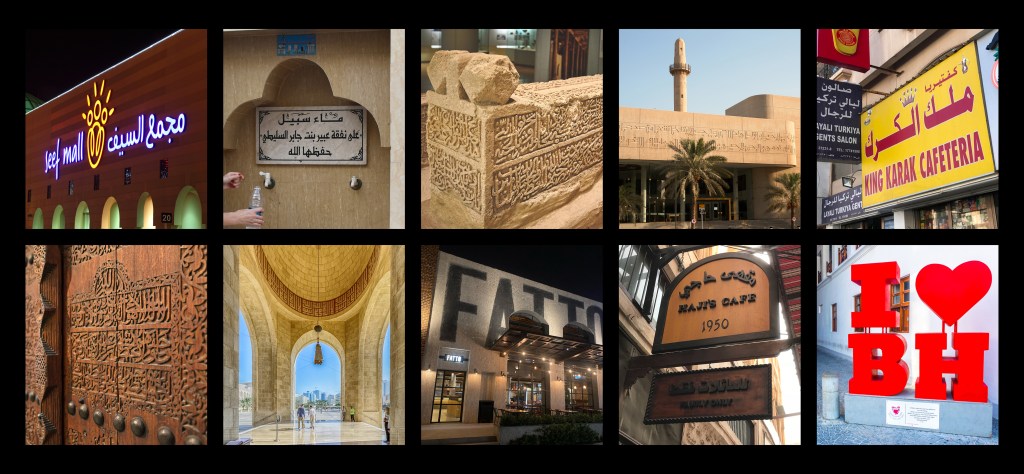
Seef Mall
Located in Seef District is Bahrain’s first authentic mall and its premier family shopping hub and entertainment destination, widely known for its distinctive architecture and stimulating ambiance. Ideally located in one of the fastest growing residential and commercial districts in the kingdom. It attracts an average of 25,000 visitors a day from locals and expats alike and usually communicates bilingually. Hence its logo is fun, catchy, resembles a small family and uses a simple typography. This typography is used across the mall, in branding, and on various collaterals. It opened since 1997. Due to its popularity, it has also opened two other branches: in Muharraq (the second largest city) and Isa Town.
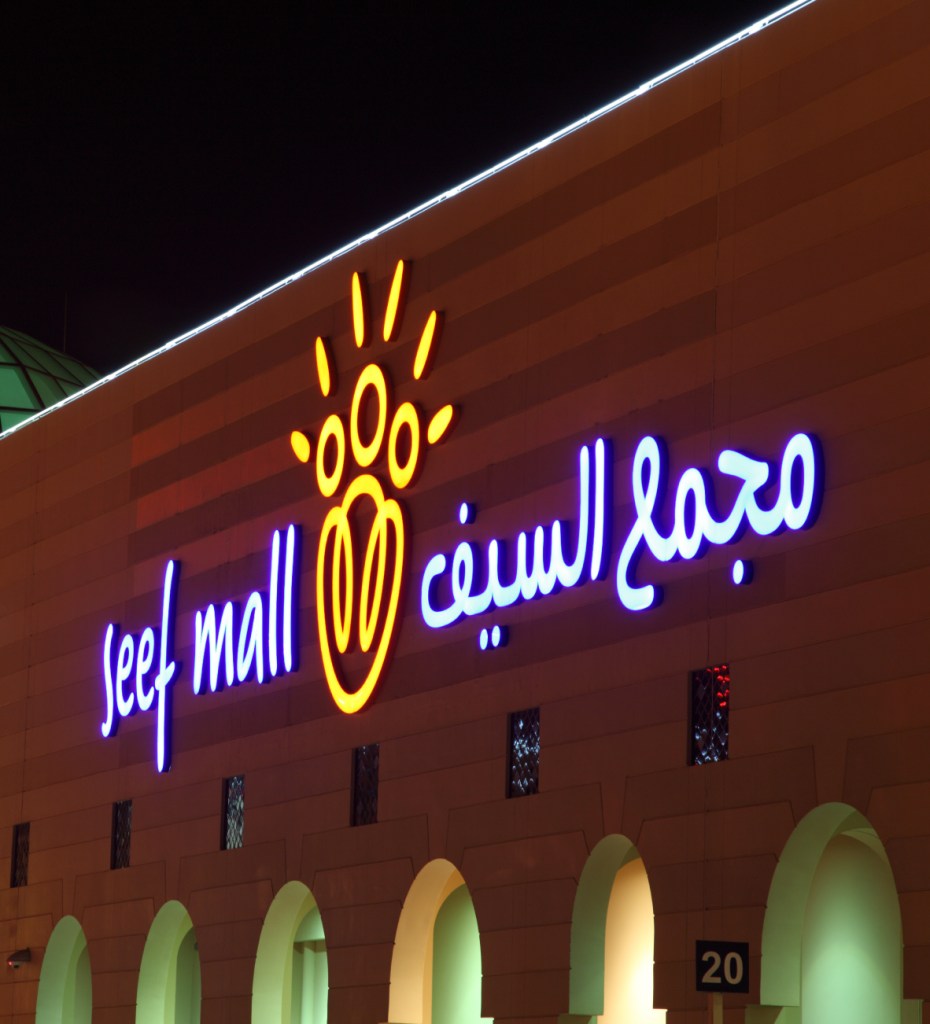
Bahrain National Museum
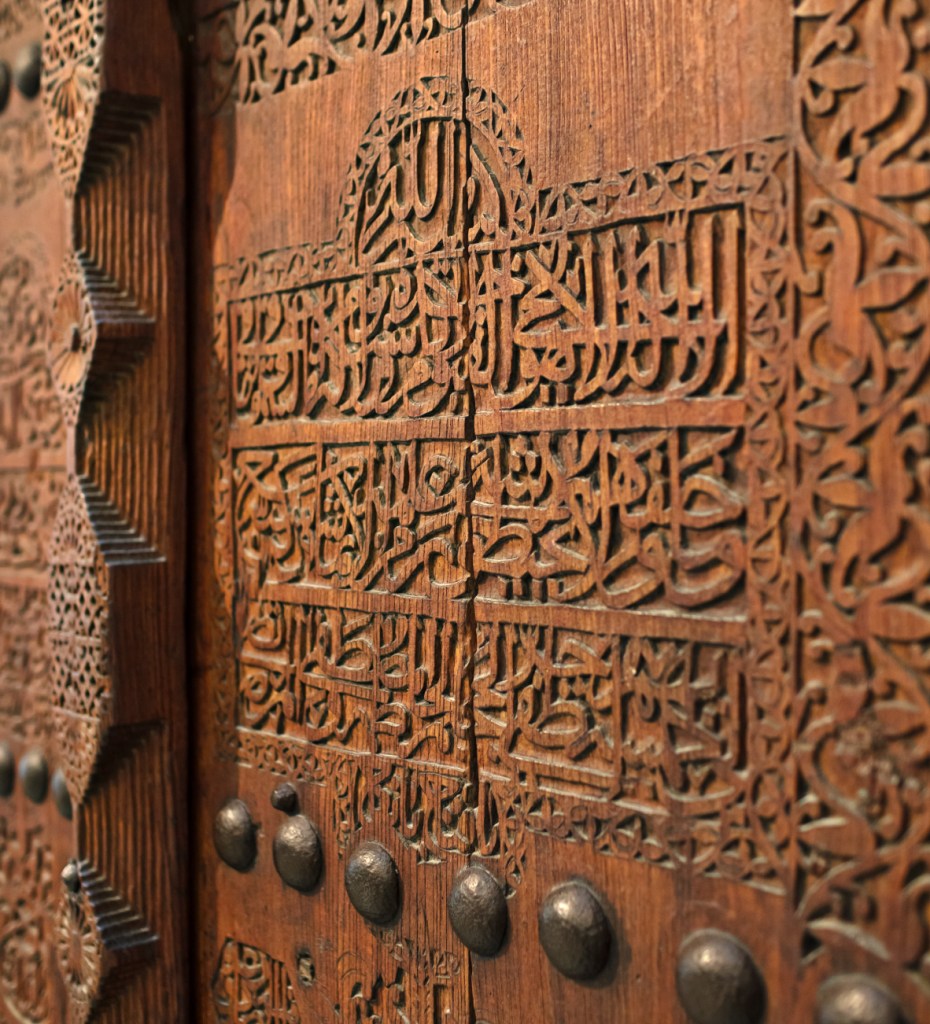
The Bahrain National Museum was officially inaugurated by the late Amir H.H. Shaikh Isa Bin Salman Al-Khalifa on 15 December 1988. It was considered one of the finest museums of its kind in the Gulf region. Today, the Bahrain National Museum is one of the island’s main cultural landmarks. It is centrally located on an artificial peninsula overlooking the island of Muharraq, adjacent to the National Theatre of Bahrain. The museum is a wonderful architectural masterpiece, as it includes a variety of artifacts, heritage, manuscripts, books, and paintings. I was fascinated by an old door made from wood and within is carved Arabic typography with verses from the Holy Quran. It symbolizes the old heritage of the kingdom which goes back to more than five thousand years.
Al Fateh Mosque
It is one of the largest mosques in the world, encompassing 6,500 square meters and having the capacity to accommodate over 7,000 worshippers at a time. The mosque was built by the late Sheikh Isa bin Salman Al Khalifa in 1987 and was named after Ahmed Al Fateh. The mosque is the largest place of worship in Bahrain. It is located next to the Al Fateh Highway in Juffair. The huge dome built on top of the Al-Fateh Mosque is constructed entirely of fiberglass. The marble used in the floors is Italian and the chandelier is from Austria. The doors are made of teak wood from India. Throughout the mosque are calligraphy writings in a very old type of style. It plays two roles of being decorative in an Islamic style and has a spiritual meaning from the Holy Quran verses utilized across it walls and arches.

Haji’s Café
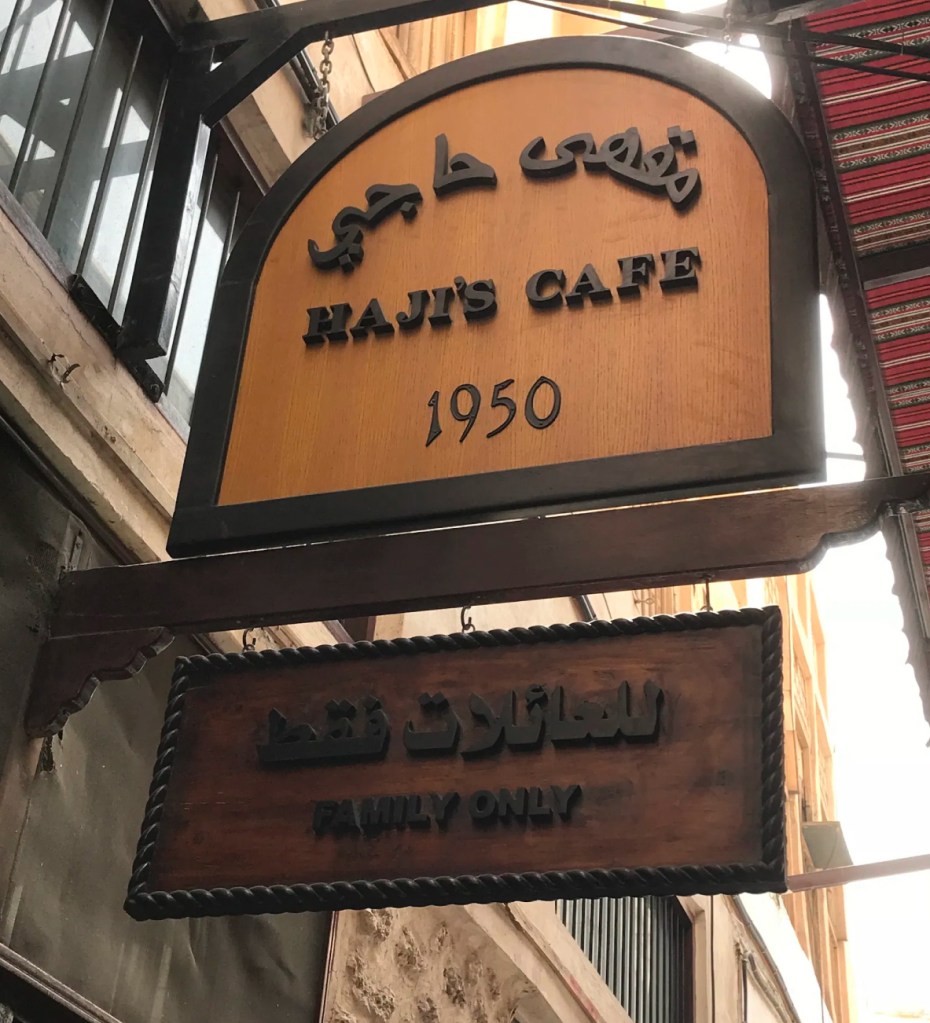
Nestled away in a walkway just inside the main Manama Souq (called Bab Al Bahrain), over 70 years old. With abundant open-air seating and traditional patron service in a busy market, the adjacent walls adorned with pictures and photographs of days gone by, visitors are cast into a past era instantaneously. This is apparent from the café’s signage made from wood utilizing iron made typography in both languages to be easily located by locals and expats alike. It has a very traditional look and feel. It blends with the old ambiance of the café, where visitors enjoy eating fine traditional dishes and accompaniments, coupled with the atmosphere of the Souq market stalls.
Beit Al Quran
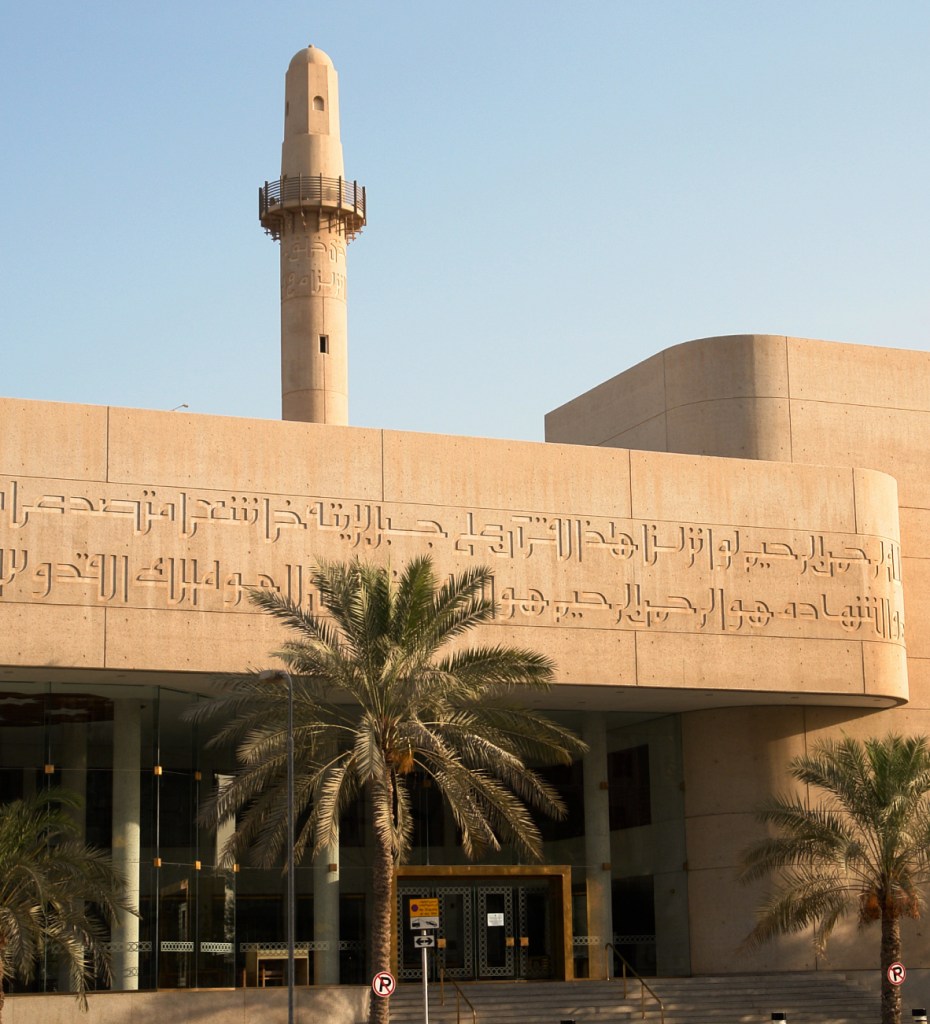
Beit Al Qur’an (meaning: The House of Qur’an) is a multi-purpose complex dedicated to the Islamic arts and is in an area called Hoora. Established in 1990, the complex is most famous for its Islamic museum, which has been acknowledged as being one of the most renowned Islamic museums in the world. The complex’s exterior designs are based on an old-fashioned 12th-century mosque and its carvings are from Islamic calligraphy. The institution and its museum house an internationally celebrated collection of historic Quranic manuscripts from various parts of the Islamic world, from China in the East and to Spain in the West, representing a progression of calligraphic traditions from the first Hijri century (622–722 AD) and of the Islamic Golden Age, to the present day.
Omar Mal,
January 28, 2021
 Omar Mal