According to Medium.com, All over the world, Designers are seeking to positively impact the lives of people doing it toughest. I have heard it called “Social Design”, “Social Impact Design”, “Design for Social Impact (or Social Innovation)” and a bunch of other things. I am one of those “Social Impact Designers”. What is common amongst these projects, is that by deeply learning about the experience of people facing these intense human challenges, and using that understanding as a launchpad for creativity, Designers have been able to rethink traditional modes of creating social change and as a result have begun to make greater impact.
Design is finding a seat at the table in policy development, traditional non-profits, international development, social impact consulting, corporate social responsibility, social enterprise, social good think tanks, community regeneration and in advocacy and activism. Though it’s fair to say, that only a few places in the world have made Design mainstream in those spaces. It remains experimental, or at least emergent, amongst the players who see Social Change as their traditional business.
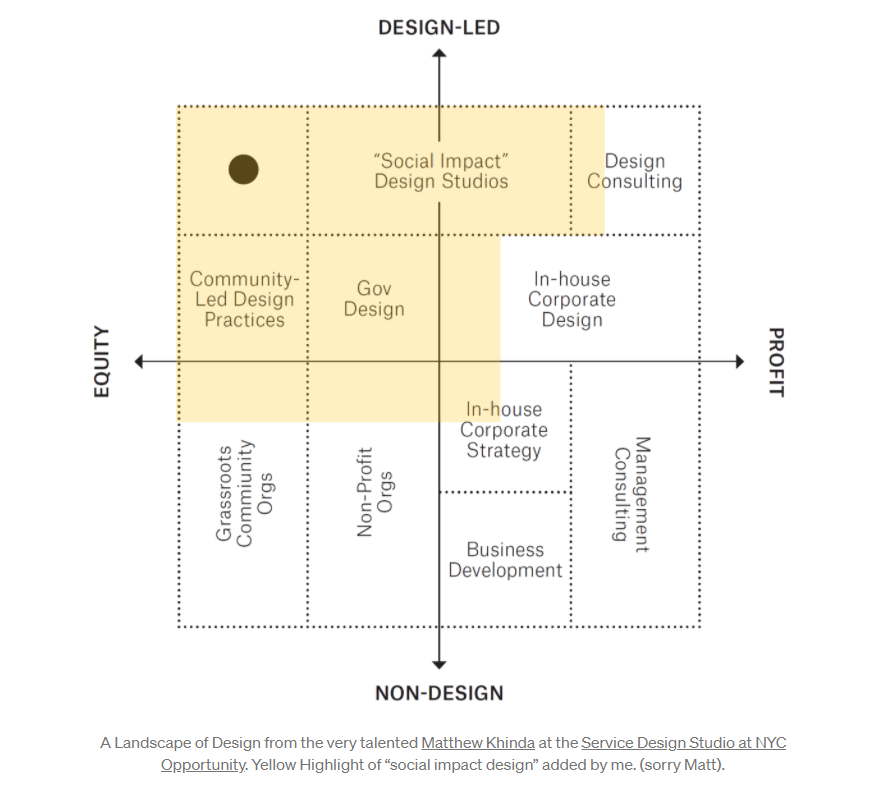
Doing Design for Social Impact gives Designers a lot of power, proposing to work on behalf of people who have traditionally been excluded from power. Encountering that vulnerability means that Designers must ask big questions about how they should wield their influence and control. It’s leading to the development of some newer thinking around “Equity Centred Design” frameworks from the Stanford d.School and Creative Reaction Labs who challenge the status quo.
One of the big critiques of Design in social impact spaces is that Designers who don’t embed deeply enough in the systems and communities they are working in, and don’t listen well enough, tend to reinvent the wheel, creating prettier versions of existing models and practices. Or worse, see good ideas sit on shelves in wonderfully crafted artefacts, never to impact the lives of anyone (except maybe the Designer, who gets to do fun work, feel virtuous and collect a great salary).
There are participatory social change practices that have come before Human Centred Design; community development, community organising, public participation. Those community organisers have some legitimate criticism of Design in Social Impact…maybe the reason Design is making waves is that it seems to be able to secure the budgets that community development always needed but could never get.
Source: https://medium.com/this-is-hcd/the-power-of-designing-for-social-impact-429a76110a79
Workshop Challenge
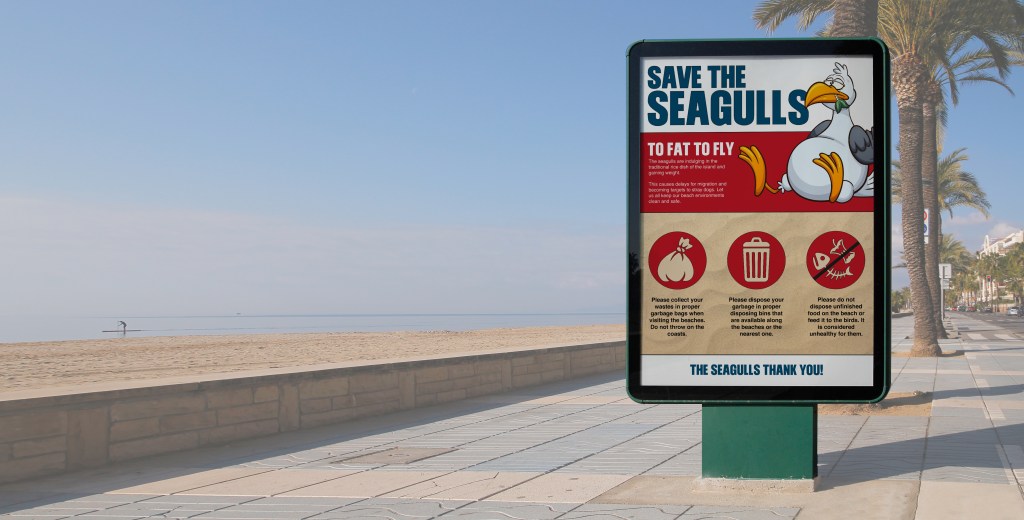
For this week’s workshop challenge, I decided to go with option 2 (conclude my service design project). The visual outcome solution is to install Mupis (or poster signs) around the beaches with instructions and guidelines to collect and throw garbage in certain designated places promoting a cleaner environment for all. Another execution is to also include sand pop-up posters across the beaches with a graphic of a fat seagull.
Omar Mal,
April 21, 2021
 Omar Mal