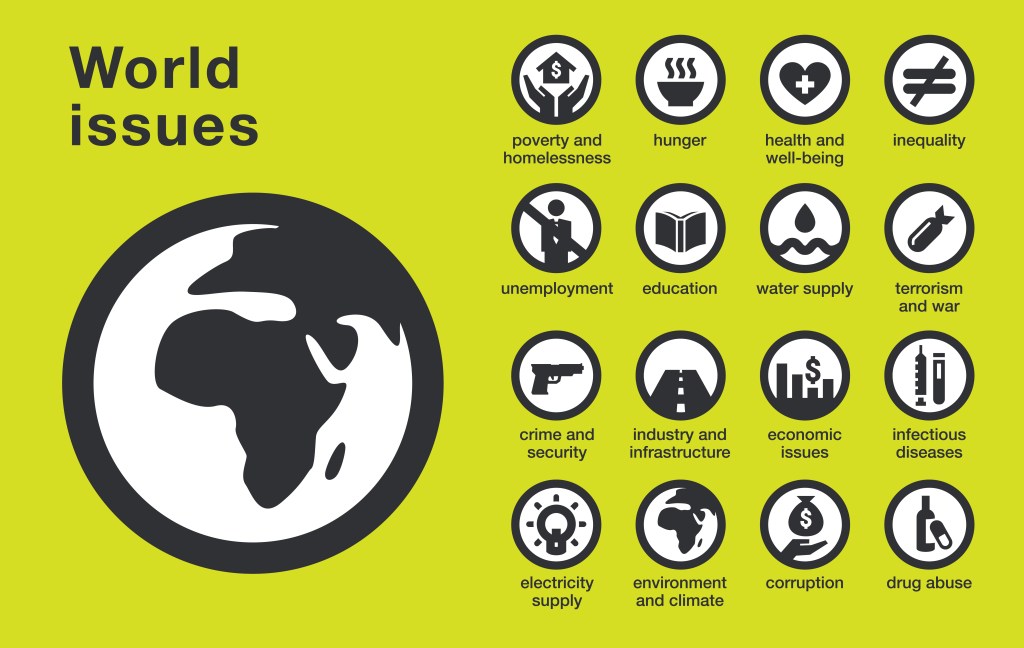
According to Products of Design, Design for social impact is the practice of interrogating systems—institutional, economic, social, political, interpersonal—in order to define opportunities for change that give voice to those who has been disenfranchised or marginalized by design. In essence, this field of study provides a methodology for examining domains of power through Socratic inquiry, structural and systems-based design thinking, and solutions-based design making.
Success in this arena is not marked by the production of an object or the completion of a project, but through extensive observation, feedback, and assessment over the long term. Feedback, in fact, is a critical requirement of design for social impact, in that it measures success not based on what the designer thinks has been accomplished, but by the user’s experience and response. Social impact is measured both by the immediate gains— does the system function as planned—as well as the organic changes that occur when people engage in real time and space with those systems and power dynamics. It is in the long-term that we hope change will be visible, not in the moment that the design team completes the implementation of an idea.
As this is an emerging field of study, there may be room to examine what a successful case study would comprise. The social impacts we are asking to measure relate to chronic, systemic issues that require long-term impact studies to draw any real conclusions. Largely inadequate to measure complex impacts, the current design case study framework might take stronger cues from the fields of sociology and the medical sciences—as much as their desired outcomes are as critical to human health and behavior as those fields. Design production as a form of sociological research benefits from explicit, formalized intersections with fields of scientific study to assess and measure outcomes.
That said, we can look at achievements and progress in the context of near-term outcomes: intent, production, distribution, and initial response. For example, when a major share-economy, hospitality service discovered that hosts were discriminating against customers on the basis of race, the company implemented new policies to address implicit bias, and considered design solutions that would level the playing field between the powerholders in that system (hosts) and those who are impacted by the discriminatory practices that leave them voiceless and powerless.
Beyond the domains of the consumer economy, important work is underway in communities that have been historically exempted from the design conversation. In one case, a major anti-recidivism organization has re-imagined the traditional experiences of people released from prison, redesigning their re-entry to purposefully address the common challenges they face when re-emerging into post-prison society. Tracking their journeys, storyboarding their realities, gaining a broad lens on their futures—this organization has designed experiences that have reduced the rates of recidivism and improved the lives of former felons, their communities, and their families.
Change is a fundamental imperative of design. Design is change. It is imperative that designers recognize the power they hold to create design that makes change that empowers the voiceless and marginalized in society; that they understand their capacity to break down systems of injustice by asking hard questions and implementing challenging solutions.
Collaboration is a fundamental driver of design. Design happens collaboratively, not as an individual act of craft or art- making. As designers choose their partners, allies and collaborators, they take the opportunity to choose the voiceless—who have critical insights to contribute—and that they include the marginalized—whose perspectives are critical to making real change. They should not only include those voices but honor the leadership and knowledge they bring. Rather than presuming the mantle leadership by default, designers for social impact facilitating the leadership of others as a condition of engagement.
Failure is a fundamental asset of design. Designs that fail bring knowledge and insight in their wake. Designers must be comfortable with the messiness of design as it applies to human society. Society is messy. Justice is messy. People are messy. Designs that embrace failure are better able to recognize the power of learning that comes when people come together to take risks, listen to one another, try something completely new and are willing to learn from their mistakes. Unlike design that sells a product, design for social justice requires that openness to the messy, inconvenience of human existence.
While design for social impact is a relatively new field in the formal sense, certainly all design has social impact. From the utensils designed to influence how and what we eat, to the apps that affect our brain chemistry and our personal relationships, all design impacts the social realm.
Indeed, at its worst, “social impact design” brought us the concept of race and the power structure that underlies a global system of relationships that empower some and disempower others based on archaic notions of purity and contamination. Race as a design construct—we might call it social engineering—was created to formalize distinctions in identity, behavior, and social interactions.
Perhaps the future of design for social impact is to interrogate and dismantle that legacy, instigating systemic changes that re-order our reality.
The future of the field, however, is also to become more self-aware; to become more aware of who is leading change, who gets to participate in the conversations and processes around change, who claims and gives credit for those ideas, and how we assess success in the near and long-term.
The success of this field is predicated on the ability of those currently working within it to include others in ways big and small, and to recognize that the voices of the disenfranchised and marginalized are deserving—even when their ideas diverge from and seek to change the processes in which designers themselves are the most confidently entrenched. In other words, designers must seek change even in themselves, and they must seek critical feedback even of themselves. Therein lies real change.
The challenges and opportunities in design for social justice are essentially the same:
- Striving for critical feedback: embracing self-criticality in intent, method and means in order to benefit the common good and give voice to the previously marginalized.
- Vigilance against self-interest: the desire to work toward change even when it benefits another over you, shifting authority and control to the previously disenfranchised.
- Persistence against orthodoxy: the willingness to challenge those in power and to question the status quo, ensuring that ideas about tradition, custom and convention are not allowed to stand in for what is right, even at the risk of shifting the balance of power of power away from those who currently hold it and giving a megaphone to the previously voiceless to amplify their own power and authority to instigate meaningful change.
Finding spaces where change is necessary and making it possible is the persistent challenge for designers working toward social impact. I hope more designers accept the challenge and define the field for the next generation to come.
Workshop Challenge
For the final week, the workshop challenge was to create a video talking about the previous weeks chosen subject of social issue. I chose to talk about the social issue of fat seagulls due to the environmental effect on the beaches. I am trying to solve this environmental and migratory issue of the seagulls and create public awareness to the locals and visitors of the beaches and coastal areas. My public awareness executions are targeting the mass of all ages to educate them about the importance of having a clean beach and environment for all.
Omar Mal,
May 3, 2021
 Omar Mal